Blog
A Workforce Evaluation Framework and Toolkit: How can it help you in healthcare?
20 May 2026

Blog
20 May 2026
Author: Jackie Chandler
What is the challenge for the NHS workforce?
NHS hospitals and community health services in England employ 1.55 million people [1]; it is the largest single healthcare workforce in Europe [2]. Currently, the NHS is still recovering from extraordinary events such as the pandemic. It needs to respond to increasing population demands, manage staff recruitment and retention within a highly disruptive environment of rapid change including implementation of technology, and the care shift from hospital to community. This is occurring within an increasingly complex institutional and regulatory environment [2].
Local workforce strategies and policy need to account for the scope, scale and sheer complexity of meeting the current government’s ambitions for a 'new NHS operating model, to deliver a more diverse and devolved health service' [1], thus indicating the benefit of evaluation. There is a focus on role diversification within and across different NHS settings involving reconfiguration of the workforce to respond to the latest policy guidelines (for example, new ways of working to support neighbourhood health).
No evidence-informed approach exists to evaluate the impact of these changes on staff and the workforce overall.
In working with frontline staff to support innovation and change, we identified a need for workforce system leads to evaluate and measure workforce changes. NHS leaders or managers responsible for the NHS workforce need information and insight into workforce efficiency, employee satisfaction and burnout, among many other areas.
What did we do?
In collaboration with NIHR Applied Research Collaboration (ARC) Wessex, we developed the Healthcare Workforce Evaluation Framework to provide an evidence informed approach to evaluate any change in practice that affects the workforce, and to guide you through a series of key topics (Fig. 1) and subtopics that are most relevant to you.
Traditionally, academic research is not easily accessible for practical application. However, the framework is enabled by a set of four tools (Fig. 2) to produce a well-supported and accessible process for use within day-to-day health services. It provides a practical and structured approach to workforce evaluation.
How does it work?
Those evaluating the impact of change on their workforce can use some or all of the tools in the order presented below (Fig. 2). They can also use some tools such as the Topic and Subtopic Selection Tool and the Subtopic Resources Tool alone to develop a survey, for example.
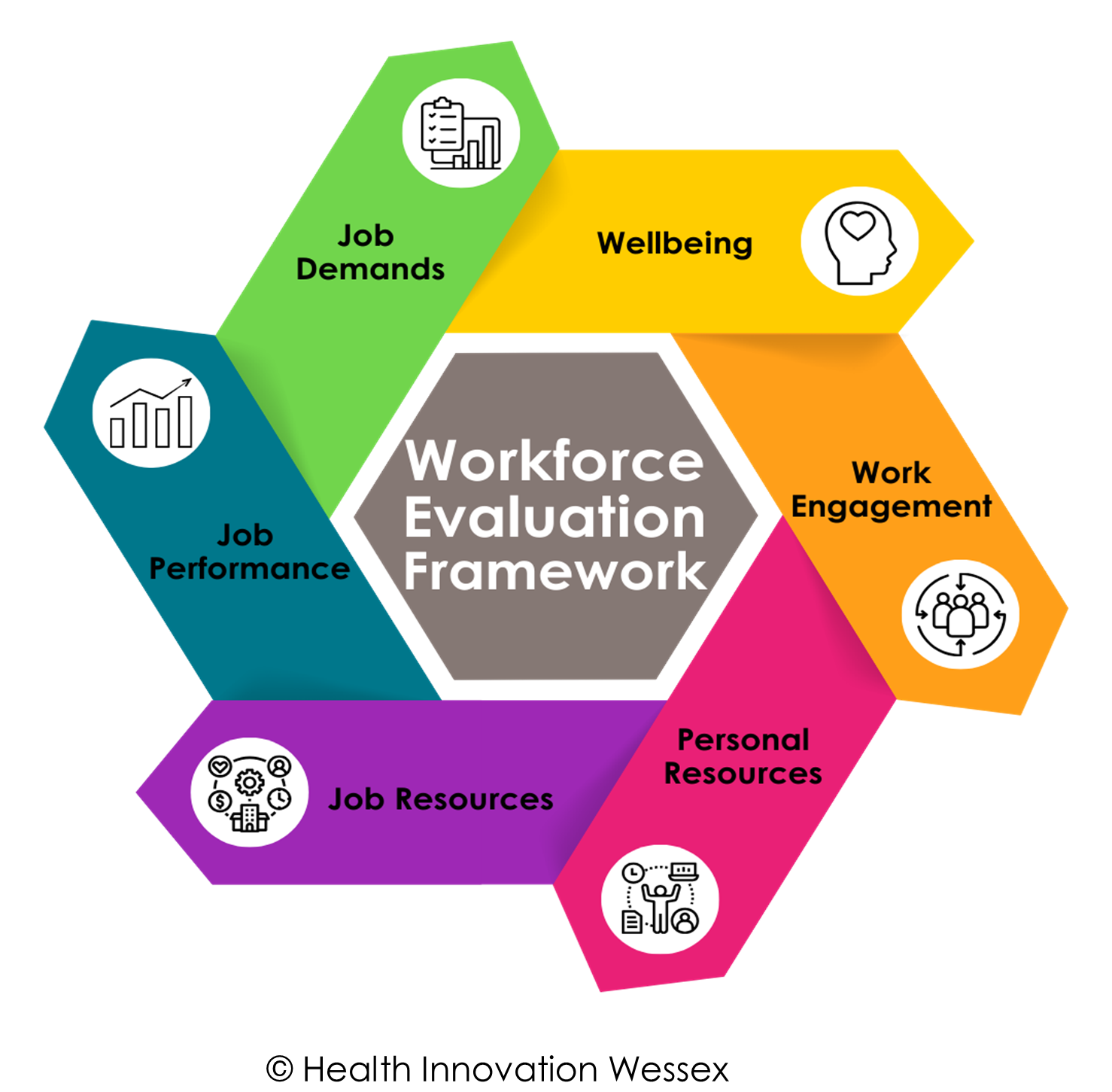
Figure 1: Healthcare Workforce Evaluation Framework
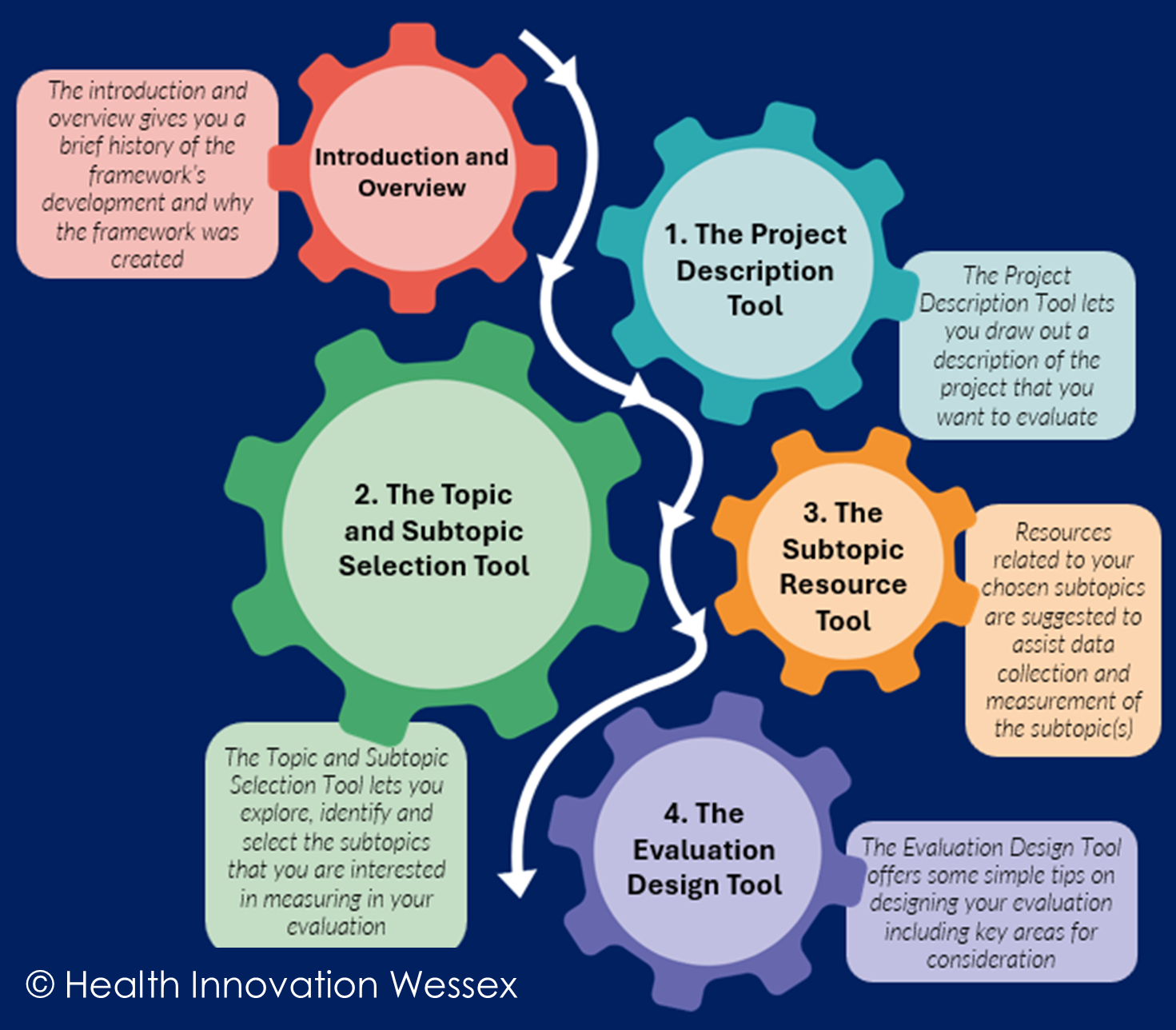
Figure 2: Toolkit workflow
Why use an evaluation framework to evaluate the workforce?
A simple answer is that it provides a structure – a coat hanger on which to organise the key elements of an evaluation plan. It enables explanation of your findings through the framework’s conceptual lens.
It is government policy to improve the NHS workforce. These improvements include new roles or role variation, or an expectation for the workforce to adapt to new technologies, or new ways of working.
This new resource will provide managers and workforce professionals with the opportunity to better understand the most effective way to roll out workforce improvements, which can impact individual staff job satisfaction, productivity, and good patient care. Evaluation of change in the workplace can reveal not only areas of risk, but also where change has brought benefits and added value to both the workforce and patients, such as
• productivity changes, a key element of NHS plans to 2029.
• the development of flexible skills
• opportunities for career progression
• benefits of flexible working arrangements.
Use of this new resource by health and care staff will improve understanding of the impact of workforce changes on individuals, organisations, or systems. Routine use of the framework and toolkit could:
• help more effective and sustainable workforce planning based on information from an evaluation, that benefits staff involved in the changes, patients, and the public
• Identify how to support staff involved in workforce changes to make change smoother and more effective
• Support staff in understanding their workplace and role, or when their role changes, to improve staff wellbeing, job satisfaction, and workforce impact, and productivity.
Who was involved in developing the Workforce Evaluation Framework and Toolkit?
ARC Wessex worked collaboratively with Health Innovation Wessex (Insight and Innovation Adoption teams) and with workforce staff in our local systems to design and test the Healthcare Workforce Evaluation Framework and Toolkit. Expertise was provided by Professor Peter Griffiths, a leader in workforce research at the University of Southampton.
This work was funded by NIHR ARC Wessex. The views expressed in this article are those of the author(s) and not necessarily those of the National Institute for Health and Care Research or the Department of Health and Social Care.
How can I access the toolkit?
For further information and access to the Healthcare Workforce Evaluation Framework and Toolkit please contact: Jackie Chandler, Evaluation Programme Manager, at jackie.chandler@hiwessex.net
References
1. NHS workforce: Size, characteristics and staffing levels. The House of Commons Library
2. Dixon-Woods M, Summers C, Morgan M, Patel K. The future of the NHS depends on its workforce BMJ 2024; 384 :e079474 doi:10.1136/bmj-2024-079474
Share
Need more information?
Contact the communications team:
(023) 8202 0858